Fine Art Fashion: Garments Redefined
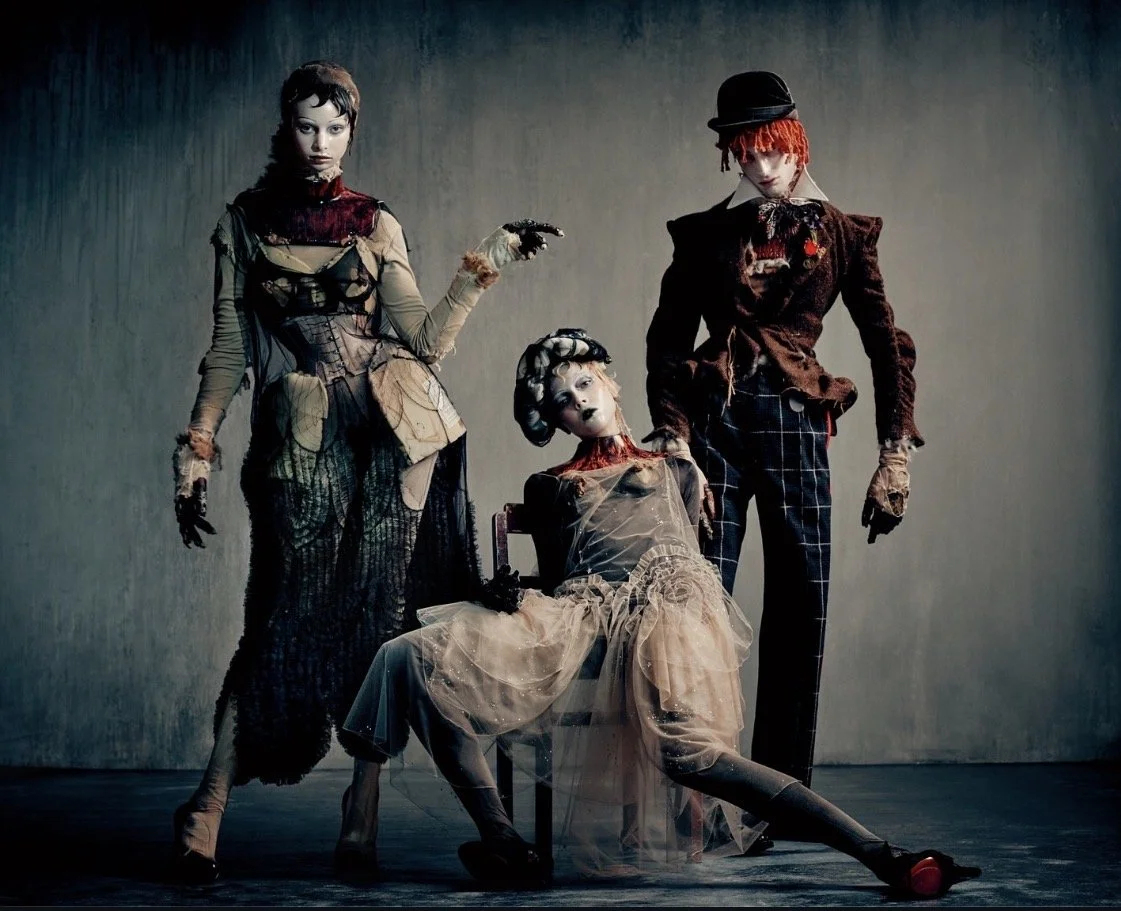
Maison Margiella’s Spring/Summer 2024 artisinal collection discusses the ritual of dressing, using clothing as an expression of the inner self, and the body as a living canvas.
When does a garment become art? Does it happen pre-production when they’re sketching the design? Or is it once the last bead is carefully stitched into the fabric’s canvas? We are covering all this and more, but first, let’s define what exactly is Fine Art Fashion.
Fine Art Fashion is the artistic expression of a concept using textile arts, turning the garment into a wearable medium. These pieces of wearable art become a visual expression of aesthetics that evoke an intellectual or emotional response. Fine Art Fashion falls under multiple forms of art including decorative, applied & fine arts. With the use of textiles and fashion design, these fine art fashion pieces serve both aesthetic and (mostly) functional purposes.
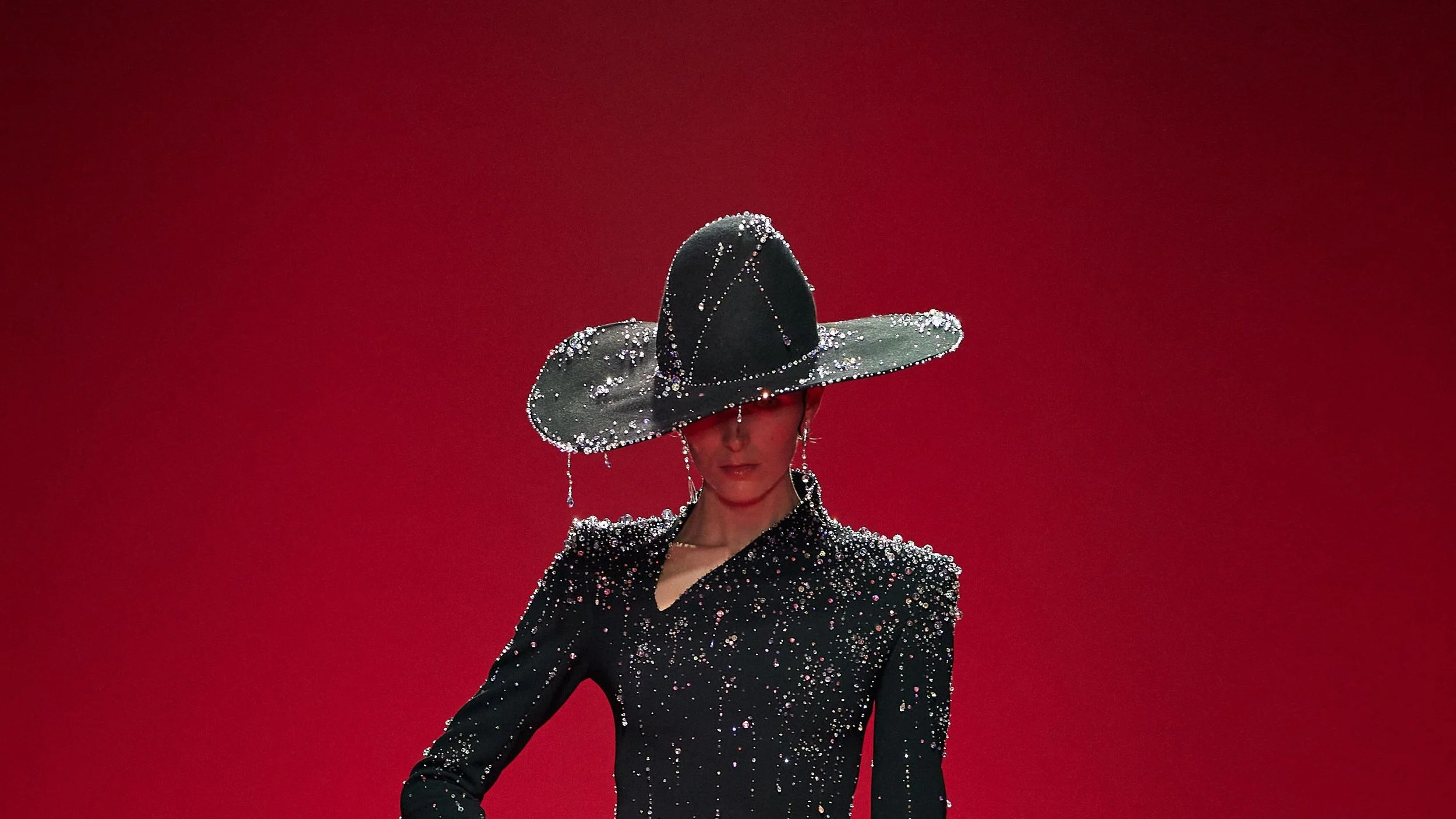
Robert Wun’s Spring/Summer 2024 collection titled For Love, is a love letter celebrating different forms of love while commemorating the 10th anniversary of the fashion house by reinterpreting past designs with a new perspective.
Let’s look at the history of both fine art & fashion as we bridge both art forms.
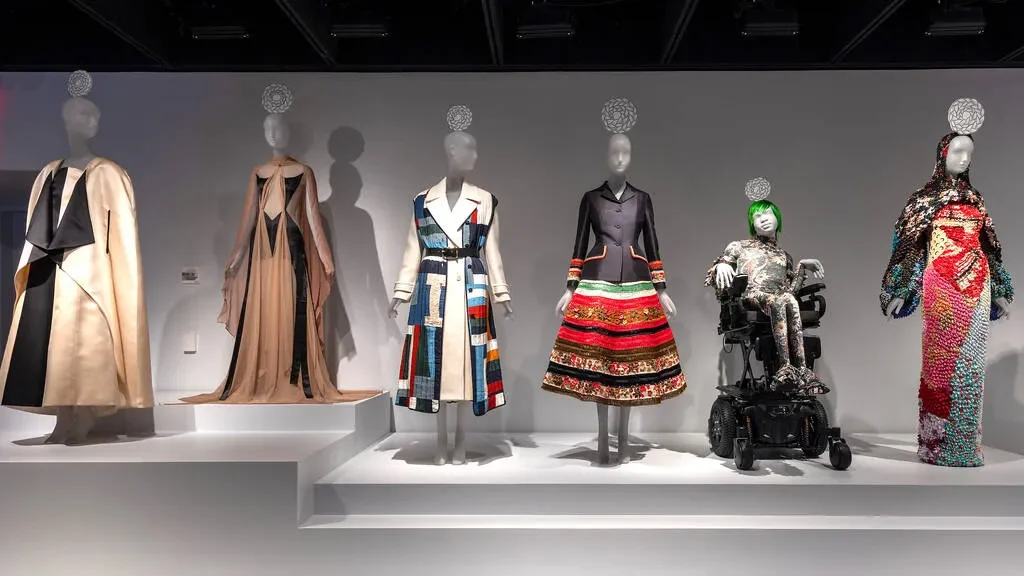
The MET’s fall 2023 exhibition Women Dressing Women
It is important to note that wealth, race and class continues to play a very important role within both the fine art and fashion world. Indigenous art prior to European colonialism reflected an intimate understanding of identity and cosmology. It was a way to highlight each place’s beliefs, social structures and values. In this way, Fine Art served for not only aesthetic purposes and to demonstrate the prowess of skills, but also served for a spiritual means to honor deities of the times. Many mayan and Aztec sculptures would often depict figures with specific hairstyles, jewelry, and tattoos that distinguished different ethnic and social groups. On the other hand, ancient roman art would reinforce cultural sterotypes and archetypes by portraying enslaved people with exagerrated features as a way of “othering” people that were seen as lesser than. Similar to the origins of fine art, clothing historically served as an indicator of status, identity within community, and spiritual practice. Over time garments began being used as a way to reflect lineage and status. As the slave trade displaced people from the caribbean and africa, fashion became a wearable contradiction as clothing became both a symbol of oppresion and resilience. This is a pivotal point in fashion where we come back to identity, as clothes are been used to retain and preserve culture in the face of western assimilation. Post-emancipation, garments became a symbol of freedom leading many to personalize their fashion style. This brings us to the more modern fashion industry where tailor-made clothing becomes popular and formal attire is established alongside many other clothing styles.
Understanding the history behind both fashion and fine art helps us better understand the systems that these art forms were built on, and how these industries continue to be affected by these systems.
What distinguishes Fine Art Fashion from Haute Couture, ready-to-wear collections or commercial-wear clothing?
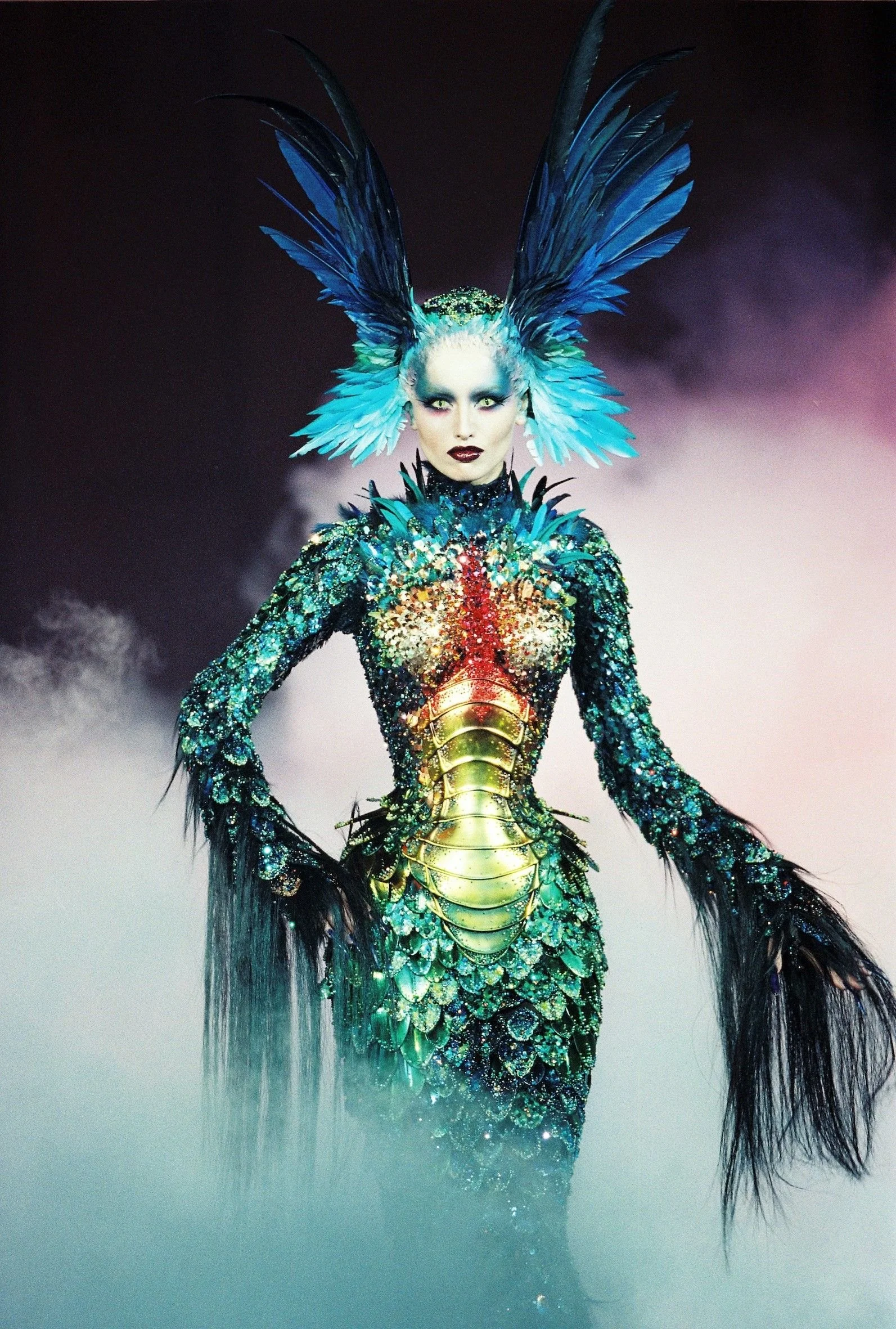
Building upon the Spring/Summer 1997 show titled Les Insectes, the infamous Chimera dress is a part of Mugler’s Autumn/Winter 1997 series Les Chimères, metamorphosing models into hybrid creatures inspired by russian and east asian influences.
This is where things get complicated. Fashion, like any artform, is subjective. So how are we to know what is and is not considered fine art fashion? It all comes back to the creative process and means of production. From research to revision, every part of the artistic process is made with an overarching concept in mind that aims to inform, evoke, express, start a conversation, etc. Some Fine Art Fashion pieces are more aesthetic and less functional, Thierry Mugler’s 1997 Chimère dress is a perfect example of this. The dress is adorned with a gold corset and scales that were individually hand-painted. Embellished with crystals, feathers, and horse hair, this piece or art took about 2 years to create with the help of Jean-Jacques Urcun and Mr Pearl. Through their designs, Thierry transforms the human body into something fantastical.
Fashion can be an artform, but not all clothing can be considered fine art fashion.
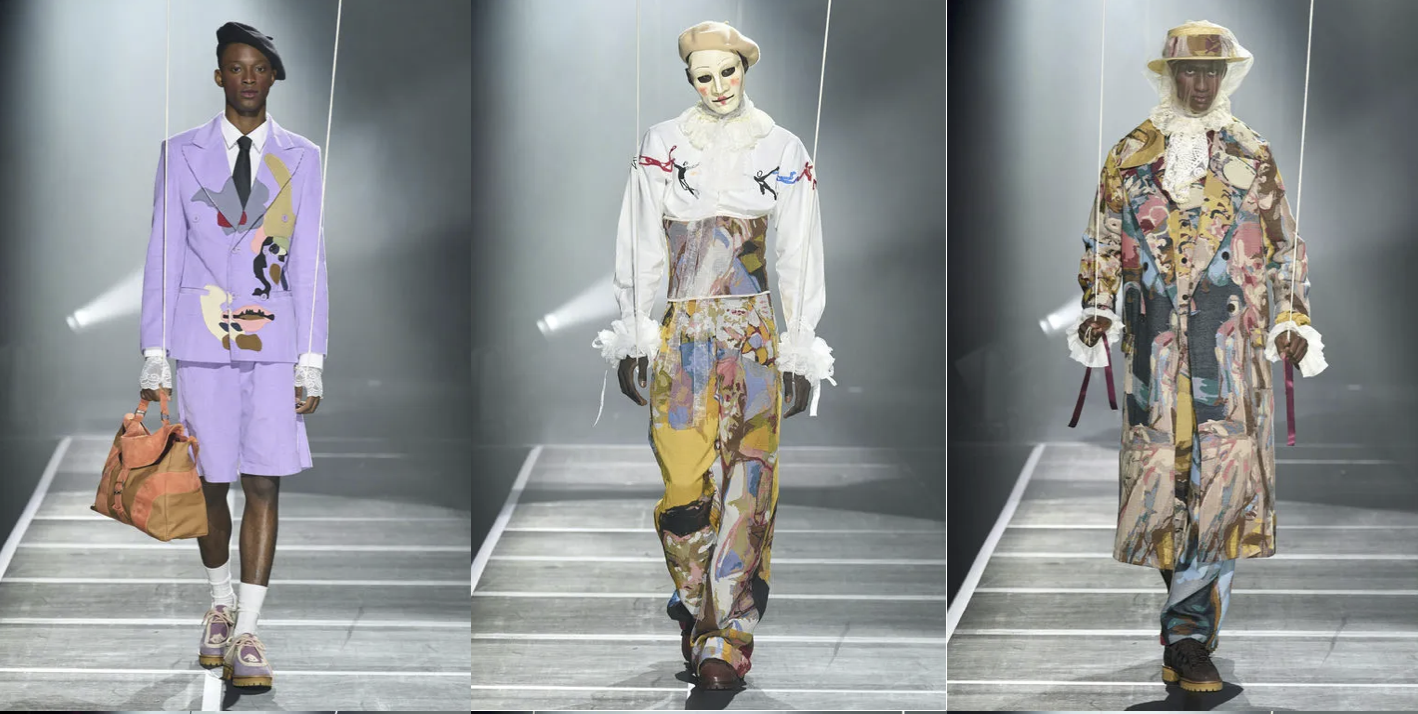
Kidsuper’s Spring/summer 2025 collection It’s all up in the air brings a child-like whimsy to life through the collaboration with Cirque du Soleil at Paris Fashion Week
Haute couture is considered fine art fashion in that each piece is custom-made for a client or runway show with an artistic concept in mind. These pieces may not always be functional, as they’re made more so for aesthetic purposes rather than wearabillity.
WOW’s Wearable Art show also falls under Fine Art Fashion even though the medium through which the garments are made may not be natural fibers or fabrics. These conceptual pieces take unconventional materials and create extravagant and otherworldy pieces. Inspiration might come from a landscape, an animal, a feeling, or other artforms.
Depending on the collection, ready-to-wear could be considered fine art fashion by use of different art forms. Some shows do have an overarching concept such as Kidsuper’s Spring/Summer 2026 series Boy Who Jumped Over the Moon, while others are inspired by a feeling or expression rather than a solidified concept. This is where production comes into play. Are these pieces limited? Do these fashion houses and brands utilize other mediums in conversation with the garments? Are the show spaces and environment supporting the overall collection? All these questions are up for interpretation.
As far as commercial-use clothiing, I personally wouldn’t categorize them as fine art fashion simply because they are mass-produced for the most part and not made with artistic expression in mind. This would include retail & fast fashion, mass market, some bridge brands, as well as some diffusion brand lines.
Fine Art Fashion bridges both industries into this beautiful, complex and nuanced artform that celebrates craftsmanship, identity and freedom of creative expression.
References:
Bernhardt-Lanier , Thomas. “What Is the Fashion Pyramid?” Medium, medium.com/@thomas_bl/7-what-is-the-fashion-pyramid-09a4e6a166a3
DAVID CLOWNEY, Definitions of Art and Fine Art's Historical Origins, The Journal of Aesthetics and Art Criticism, Volume 69, Issue 3, August 2011, Pages 309–320, https://doi.org/10.1111/j.1540-6245.2011.01474.x
Eagleton, Terry. “The Ideology of the Aesthetic.” Poetics Today, vol. 9, no. 2, 1988, pp. 327–38. JSTOR, https://doi.org/10.2307/1772692
Historian, Rogue Art. “How Has Race Been Represented in Art throughout History?” How Has Race Been Represented in Art Throughout History?, The Rogue Art Historian, 16 Dec. 2024, roguearthistorian.substack.com/p/how-has-race-been-represented-in.
Howard, Jeremy R.. "art market." Encyclopedia Britannica, https://www.britannica.com/money/art-market.
“Museum of Style.” MUSEUM OF STYLE, museumofstyle.org/origins-of-style-fashion-from-early-civilizations-to-the-modern-era/. Accessed 13 May 2026.